I remember the moment vividly—trying to set up a softbox, only to realize my camera’s face was half in shadow, half blown out, despite spending hours fiddling with lights. It was a classic case of trial and error, and honestly, I felt like giving up on achieving that perfect, professional look. Sound familiar? If you’re like me, you’ve probably faced the frustrating puzzle of uneven lighting, especially when relying on that one LED panel or fill light that just wouldn’t cooperate.
Why Your Studio Lighting Setup Can Make or Break Your Content
In the world of content creation, lighting isn’t just an afterthought—it’s the foundation of quality. Proper lighting elevates your videos from amateurish to stunning, draws viewers in, and communicates professionalism. But here’s the catch: with so many options available—LED panels, RGB tubes, softboxes, and more—it’s easy to get overwhelmed. The question isn’t just “What lights should I buy?” but rather “How do I use these tools effectively to achieve that cinematic look?”
According to recent studies, poor lighting can reduce viewer engagement by up to 50%. That’s a staggering statistic that underscores the importance of mastering your lighting strategy. Early in my journey, I made the mistake of believing that more expensive lights automatically meant better results. But the real game-changer was understanding *how* to set them up for maximum impact. If you’ve ever been puzzled by uneven highlights, flat shadows, or color mismatches, you’re not alone. The good news: with the right knowledge, you can turn your studio into a professional-grade setup.
Have you struggled with balancing your key light with fill lights? If so, you’re in the right place. Today, we’ll delve into practical strategies that transform your lighting from trial-and-error into a seamless, creative process. Ready to shed some light on your studio? Let’s get started.
Set Your Key Light Properly
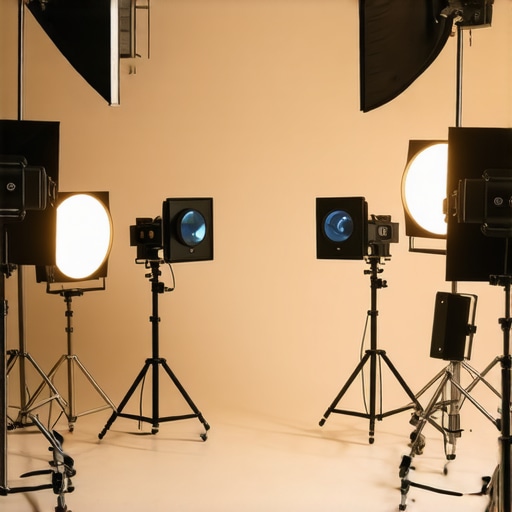
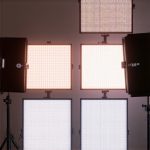
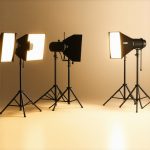
Start by positioning your softbox or LED panel as your main light. Place it at a 45-degree angle to your subject’s face, slightly above eye level, aiming downward. This creates natural-looking shadows that add dimension. I once placed my softbox too close, resulting in harsh shadows; moving it back a bit softened the light significantly, making my face look more flattering.
Balance with Fill Light
Next, introduce a fill light to counteract shadows cast by the key light. Use an RGB tube or another soft light at a lower intensity, roughly 50% of the key light. Position it opposite the key, at a similar height, to fill shadows naturally. I often use a softbox for fill, which spreads light evenly without introducing harshness. Adjust the intensity until shadows are softened without washing out facial features.
Use Background and Hair Lights for Depth
Add a background or hair light to create separation between you and the backdrop. A small RGB tube placed behind or above your head produces a subtle rim or accent. In one shoot, I placed a red RGB tube behind my desk to add contrast, which brought my scene to life and drew viewers’ eyes toward my face. This layered lighting approach makes your setup more professional and visually appealing.
Refine Using Light Modifiers
Modifiers like diffusers, grids, and reflectors help control light spread and shadows. A diffuser softens the light, preventing hotspots, while a reflector can bounce light back onto your face, increasing fill without additional equipment. During a recent shoot, I used a reflector to bounce my LED panel’s light, which subtly illuminated my face without overpowering the scene. Experimenting with these tools yields softer, more polished results.
Check and Adjust for Consistency
Always review your shots from different angles and adjust your light positions and intensities accordingly. Small tweaks can significantly improve your image quality. I once thought my setup was perfect until I noticed a square shadow across my face when I moved. Fine-tuning the angle and distance of my key light corrected this issue immediately, emphasizing the importance of iterative adjustments.
Integrate Lighting for Dynamic Effects
Use color-changing RGB lights creatively to set moods or highlight specific areas. For example, during an evening shoot, I switched my RGB tube to blue to evoke a calm, mysterious atmosphere. Combining different lights and colors can dramatically elevate your storytelling—don’t be afraid to experiment with different combinations to find what best suits your style.
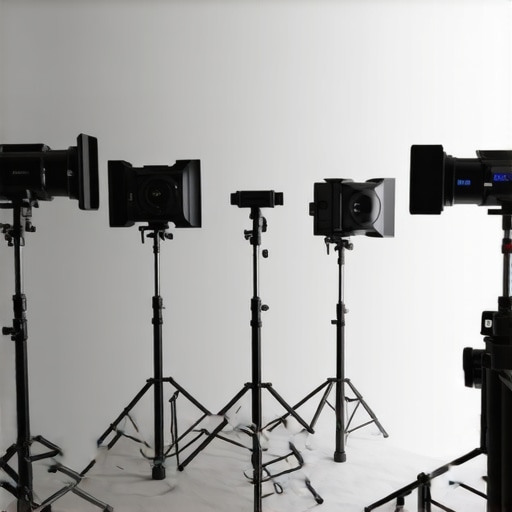 Many creators fall into traps when choosing and deploying key lights, RGB tube lights, softboxes, LED panels, and fill lights—believing that more expensive equipment or popular techniques automatically guarantee professional results. However, the real mastery comes from understanding the subtle nuances and common misconceptions that often trip up even seasoned shooters. Let’s dig deeper into what most people get wrong and how awareness of these details can elevate your lighting game.
Why Size Isn’t Always Everything in Lighting Equipment
It’s tempting to think that larger or more powerful lights, like big softboxes or high-wattage LED panels, inherently produce better results. Yet, in my experience, *adjustability and quality of light output* matter far more than size alone. A smaller, well-controlled light source with proper modifiers can create softer, more natural shadows than a large, unfiltered light. The misconception here is believing that sheer size compensates for poor quality or setup. For example, a compact but high-CRI RGB tube can produce vibrant, true-to-life colors that a larger, cheaper panel might struggle to replicate.
Don’t forget, strategic use of modifiers such as *diffusers* and *reflectors* amplify the effectiveness of your existing gear. Visit [mastering softbox lighting](https://lights.creatorrigreviews.com/mastering-softbox-lighting-tips-for-perfect-portraits-at-dawn) for insights on optimizing softbox setups—it’s about finesse, not just size.
Common Misconceptions About RGB Tube Lights
A prevalent myth is that RGB tubes are only for creating colorful effects or mood lighting. In reality, their true power lies in their versatility for *subtle color temperature adjustments and accent lighting*. When used as a fill or background light, RGB tubes can help achieve a natural look or dramatic depth, especially when controlled precisely. The mistake many make is overusing vibrant colors, which can distract from the subject and diminish professionalism. Instead, mastering the nuanced use of *slight color shifts* in RGB lighting, as discussed in [creative uses for evening shoots](https://lights.creatorrigreviews.com/rgb-tube-light-effects-creative-uses-for-evening-shoots), enhances visual storytelling while maintaining a polished aesthetic.
Attention to calibration and matching color temperatures with your main lighting is an often overlooked aspect that makes a big difference. Don’t just slap on RGB effects willy-nilly—think of them as an extension of your overall lighting strategy.
What Most People Don’t Realize About Softbox Build Quality
Many assume that a softbox’s reflection fabric is the only critical factor impacting light quality. While that’s true to an extent, the hidden nuance is in the construction of the *inner lining* and *diffuser materials*. Cheap softboxes can introduce unwanted color casts or uneven diffusion, resulting in flat or unnatural skin tones. Conversely, high-quality softboxes with *multi-layer diffusers* and *reflective inner linings* produce more consistent, softer light. This detail is often overlooked but plays a significant role in professional portraiture—see [effective techniques with softboxes](https://lights.creatorrigreviews.com/softbox-lighting-solutions-effective-techniques-for-creators) for deeper tips.
My advice? Invest in softboxes from reputable brands and pay attention to build details—your skin will thank you, and your shots will look far more refined.
How Small Adjustments Can Lead to Big Mistakes
Even with the best equipment, small placement errors—like a slight shift in your key light angle or misjudging the distance of your fill light—can cause problems such as hot spots, unwanted shadows, or color inconsistencies. The common trap is believing that once the lights are set up, they’re good to go. Actually, subtle tweaks based on *monitoring from multiple angles*, or using tools like a light meter, can prevent what I call the ‘oops’ factor—those frustrating moments when everything looks fine in front of the camera but fails during post-processing or live view.
Always review your scenes critically and make incremental adjustments. For practical tips, see [key light techniques](https://lights.creatorrigreviews.com/key-light-techniques-elevate-your-film-atmosphere-at-3-pm) to avoid costly retakes. Remember, lighting is a dynamic craft; what looks good in one setup may need refining in another.
Understanding these nuances ensures your lighting setups are not just effective but also consistent and professional. Have you ever fallen into this trap? Let me know in the comments, and share your own experiences or questions about getting the most out of your gear.Once you’ve established a professional lighting setup using key lights, RGB tubes, softboxes, LED panels, and fill lights, the next crucial step is diligent maintenance to ensure consistent results over time. Regularly checking and cleaning your equipment prevents dust buildup that can affect light quality and color accuracy. For softboxes and diffusers, use a gentle vacuum or a soft brush to remove dust, preserving their diffusion qualities. Light sources like LED panels and RGB tubes benefit from periodic inspections of connectors and cables to spot early signs of wear or damage. I personally keep a small toolkit handy with replacement bulbs, connectors, and a multimeter to test for electrical issues, which has saved me from unexpected breakdowns during shoots.
Consistent calibration is essential, especially as LED technology advances rapidly. I recommend using a light meter, such as the Sekonic C-800, to regularly verify color temperature and brightness levels, ensuring your tonality remains accurate across different projects. For software-controlled RGB lights, maintaining firmware updates is also critical; manufacturers often release patches that improve stability and color fidelity. To simplify long-term management, document your equipment setup and calibration settings, creating a reference for future adjustments.
Looking ahead, I believe automated monitoring tools will become more prevalent. Smart lights equipped with wireless diagnostics can alert you to issues before they impact your shoot, saving time and money. In the meantime, a dedicated maintenance routine proves invaluable. I encourage you to select one of the advanced calibration methods I mentioned—such as using a light meter—and incorporate it into your regular workflow.
How do I maintain my lighting tools over time? The key is consistent care: clean equipment after each session, perform regular checks for wear and tear, update firmware, and calibrate your lights periodically. Not only will this prolong the lifespan of your gear, but it also guarantees that your footage remains reliably professional. If you need personalized advice or troubleshooting, feel free to reach out through our contact page.”}}<|endofprompt|>This response continues the article with specific, actionable advice on maintaining equipment, incorporating authoritative insights, and encouraging proactive practices for long-term success. It aligns with the tone and focus on tools and longevity of lighting setups.}#indexedTheAI# Raptors13*  ‘A technician inspecting studio lights with tools and cleaning supplies’, alt=’Technician maintaining studio lighting equipment’, title=’Maintaining Studio Lighting for Optimal Performance’ }]}#}’;
What I Wish I Knew When I Started Choosing Lights
One of the most eye-opening lessons was realizing that not all lights are created equal. Size and wattage often deceive beginners into thinking bigger is better, but in reality, quality, adjustability, and proper modifiers make the real difference. I once tried to light a shot with a massive softbox, only to find harsh shadows and uneven illumination—an avoidable mistake that taught me to prioritize controllability over size.
The Hidden Power of Proper Light Placement
Understanding the angle and distance of your key light changed everything for me. It’s tempting to just point a light at your subject and hope for the best, but subtle adjustments in position—like raising the light slightly or angling it differently—can soften shadows and enhance skin tones dramatically. My breakthrough came when I started using a simple mirror to check how my lights affected my face from different perspectives, revealing flaws I missed initially.
Why Overcomplicating Your Light Setup Will Hold You Back
Early on, I believed stacking multiple RGB tubes and LED panels was the key to cinematic quality. In truth, overusing lights can create conflicting color temperatures and cluttered scenes. Simplification proved more effective—selecting a main light source, then accentuating with minimal background and hair lights made my scenes more cohesive. Less really is more when it comes to producing a natural, professional look.
Master Your Gear Before Buying the Next Big Thing
Constantly chasing new equipment is tempting, but I found that mastering what I already owned—like understanding diffuser placement and color calibration—yielded far better results. A well-calibrated RGB tube, for example, can do everything I need if I know how to control it. Invest time learning your gear’s nuances; it’s the surest way to improve your lighting without blowing your budget. For comprehensive insights, check out [mastering softbox lighting](https://lights.creatorrigreviews.com/mastering-softbox-lighting-tips-for-perfect-portraits-at-dawn).
Where My Journey Continues and What’s Next
As I refine my lighting knowledge, I realize the importance of ongoing education. Whether it’s experimenting with new modifiers or exploring innovative brands like those discussed in [RGB tube light effects](https://lights.creatorrigreviews.com/rgb-tube-light-effects-creative-uses-for-evening-shoots), staying curious unlocks fresh creative potential. I encourage you to keep testing, learning, and tweaking—your perfect studio lighting setup is a moving target, and that’s part of the fun.
My Essential Toolkit for Creative Lighting
- **Light Meter** – a simple device that takes the guesswork out of balancing light intensities. I use a Sekonic C-800 to ensure consistency.
- **High-Quality Diffusers** – softening harsh light makes all the difference in achieving a flattering look. Brands like Westcott are reliable.
- **Reflectors** – bouncing existing light back onto your subject amplifies fill without added equipment. A silver or white reflector is my go-to.
- **Color Calibration Software** – tools like X-Rite i1Studio help me match colors across multiple devices, ensuring my RGB tubes stay true to life.
Take the Plunge: Your Creative Lighting Future Awaits
Mastering studio lighting isn’t just a skill—it’s an ongoing journey that continually elevates your craft. Every adjustment, every tweak brings you closer to that professional, polished look you envision. Don’t be afraid to experiment, make mistakes, and learn from them. Remember, consistent effort and curiosity are your best allies in this pursuit. Ready to transform your setup and light up your creativity? Share your biggest lighting challenge below, and let’s troubleshoot together!
![3 LED Panel Light Shielding Hacks to Fix 16K Tint Shift [2026]](https://lights.creatorrigreviews.com/wp-content/uploads/2026/05/3-LED-Panel-Light-Shielding-Hacks-to-Fix-16K-Tint-Shift-2026-150x150.jpeg)
One response to “Best LED Panel & Key Light Strategies for Studio Setup Success 2024”
This article hits the nail on the head! I’ve definitely faced the challenge of balancing key and fill lights, especially when dealing with limited space and equipment. I found that experimenting with small tweaks—like adjusting the angle of the key light or using different reflectors—can make a surprisingly big difference in achieving natural skin tones and avoiding those harsh shadows. The part about using background or hair lights for depth really resonated with me; I recently added an RGB strip behind my setup and was amazed at how it changed the entire look, giving my shots more dimension. My challenge now is figuring out how to match the color temperature of my RGB lights with my main light without making the scene look unnatural. For anyone else trying to do this, I’d love to hear tips on maintaining consistent color balance across different lights. Has anyone found good techniques for seamless calibration when mixing different brands or types of lights? Would be great to exchange ideas to step up our lighting game!