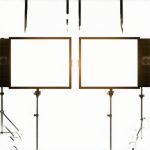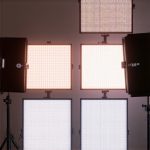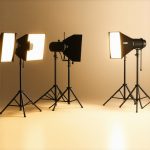
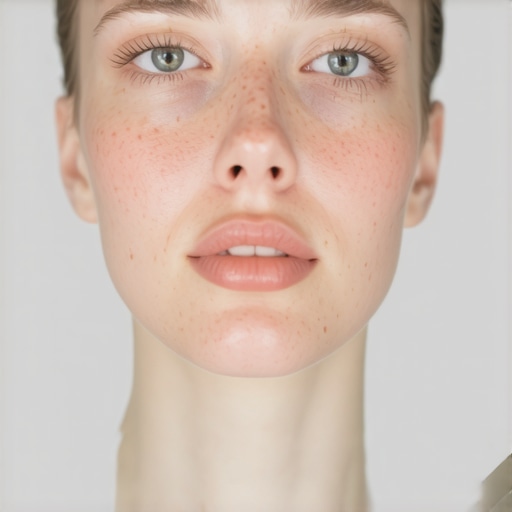
Ever had that frustrating moment on set when your subject’s face looks oddly flat, lifeless, and devoid of depth? I remember the shock when I first noticed my own videos and photos suffering from what I now call the ‘Flat Face Syndrome.’ It hit me like a wave—despite using top-tier LED panels and softboxes, something was still missing. The culprit? The positioning and distance of my fill lights. It was a lightbulb moment that changed everything.
Why Proper Fill Light Distance Holds the Key to Natural, Cinematic Portraits
Understanding how to position your fill lights can drastically alter the dimension and clarity of your shots. When I initially started, I made the mistake of placing my fill lights too close, thinking more light means better brightness. Instead, it washed out my subjects, flattening their features and killing the depth I craved. This common mistake is often overlooked, but mastering it can be the difference between a flat, dull shot and one bursting with life. According to a study by the Society for Imaging Science and Technology, lighting positioning has a profound impact on perceived depth in images, especially under studio conditions. If you’ve faced the same frustration, you’re not alone, and the good news is—there’s a way out.
Is Fill Light Distance Really That Critical?
I used to dismiss the idea that a few inches could make such a difference. I thought, “It’s just fill light—how complicated can it be?” But early on, I also believed that more expensive equipment would automatically produce better results. That false assumption led me to overlook simple, effective tricks. The realization was humbling but empowering. Once I started experimenting with different distances, everything changed. My portraits gained natural depth, and my videos looked more professional. This is not about spending more money but about knowing the right positioning techniques. Want to skip the trial and error? Keep reading—what I learned can save you a lot of time and headaches and help you achieve that beautiful, cinematic look you’re after. To deepen your understanding, consider checking our detailed guide on how to position your fill light for cinematic depth in 2026.
So, if you’ve ever looked at your footage and thought, “Something’s off,” and wondered how to add that subtle but crucial depth, you’re in the right place. In the upcoming sections, I’ll share the specific tricks that turned my flat, featureless shots into vibrant, multi-dimensional images. Let’s dive into the three fill light distance secrets that will fix your 2026 flat face syndrome once and for all—ready to see your subject come alive on camera?
Set Your Light Distance with Precision
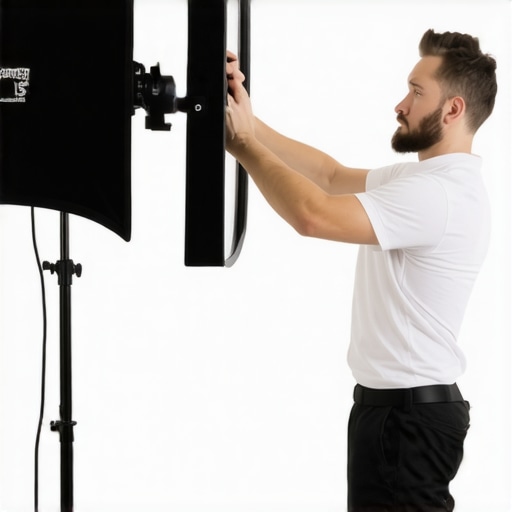
Begin by positioning your fill light approximately 45 degrees to the side of your subject, roughly 3 to 6 feet away. Use a softbox attached to your LED panel to diffuse harsh shadows. Start with the light at 4 feet, observe the results, and gradually adjust closer or farther to see how it affects facial depth. I once set mine too close at 2 feet, which washed out the features and eliminated dimensionality. Moving it back to 5 feet created a pleasing balance of light and shadow, adding depth that made my subject come alive.
Adjust the Height for Flattering Coverage
Position the fill light slightly below eye level, angling it upward, mimicking natural light from below or the side. This prevents flatness and creates subtle shading that accentuates facial contours. Once I elevated my softbox to eye height and tilted it up slightly, shadows under the chin became softer, and the face gained a natural 3D look, avoiding the dreaded flat face syndrome.
Fine-Tune Intensity for Depth
Control your light’s brightness with a dimmer or by proximity. Too bright, and you flatten features; too dim, and you lose dimension. Use a light meter or simply eyeball it. I used to crank my fill light to maximum, but that resulted in a washed-out look. Dialing it down until shadows appeared naturally yielded a realistic, vibrant image. Remember, subtlety is key: small adjustments can vastly improve the perception of depth.
Utilize Color Temperature for Realism
Match your fill light’s color temperature to your key light to maintain natural skin tones. If your key is daylight-balanced (around 5600K), set your fill to the same. If you’re shooting in mixed lighting, balance accordingly. I experimented with RGB tube lights to add subtle color accents, but always kept their temperature in harmony to prevent unnatural skin tones. For creative effects, slight color shifts can add mood, but they should enhance, not distract from, realistic depth.
Constantly Observe and Adjust
Regularly review your footage in real time. Use your camera’s LCD or external monitor, and pay attention to facial shadows. Small tweaks in distance, angle, or brightness can dramatically improve depth perception. During a recent shoot, I noticed a shadow under the nose forming when I moved the fill light too far, flattening the face. Moving it slightly closer eliminated that shadow, restoring the natural curvature of the face and achieving a cinematic, three-dimensional look.
Remember, every face is unique. Use these steps as starting points, then customize based on your subject and environment. Think of your fill light as a sculptor’s tool—light it right, and your subject’s features will stand out with vivid realism and depth, making every shot burst with life and dimension.
 When it comes to studio lighting, many creators assume that having high-end LED panels, RGB tubes, or softboxes automatically guarantees cinematic quality. However, the real challenge lies in mastering the subtleties—the small but impactful details that set professional results apart from amateur setups. One common misconception is that brighter or larger lights will always improve your footage, but in practice, overexposure or improper diffusion can flatten your image and diminish depth. According to expert lighting designer Neil van Niekerk, understanding how to manipulate diffusion and light placement is critical for natural skin tones and dimensionality. Moreover, many overlook the importance of spectral quality; not all LEDs render colors equally. Cheap or poorly calibrated RGB tubes can produce color casts that are hard to correct in post-production, leading to unnatural visuals. This is where investing in high CRI (Color Rendering Index) lights becomes essential, as detailed by professional cinematographers in our [Ultimate Guide to LED Panel Key Light Setup](https://lights.creatorrigreviews.com/ultimate-guide-to-led-panel-key-light-setup-for-studio-in-2024). A common trap is relying solely on the advertised brightness (lumens), ignoring the light’s color fidelity and beam spread, which can produce harsh shadows or dull highlights. Additionally, many creators neglect the importance of light shaping accessories such as grids or flags to control spill and create a more cinematic look. If you’re using softboxes without diffusers or grids, you risk softening your light excessively or losing control over shadows, leading to a flat appearance. Curious about how to fine-tune your softbox angles or diffusion layers? Check out our [Mastering Softbox Lighting](https://lights.creatorrigreviews.com/mastering-softbox-lighting-tips-for-perfect-portraits-at-dawn) for expert tips. Advanced users often ask: “How do I balance multiple RGB tube lights to achieve natural skin tones in mixed lighting environments?” Achieving this balance requires understanding spectral overlaps and color mixing principles, which can be complex but rewarding. The key is to use calibrated lights with precise color temperature controls and employ color gels or software to match tones seamlessly—something detailed in [RGB Tube Light Effects](https://lights.creatorrigreviews.com/rgb-tube-light-effects-creative-uses-for-evening-shoots). Don’t fall into the trap of neglecting these nuances; your footage’s depth, vibrancy, and realism depend on it. Want personalized advice? Reach out through our [Contact Page](https://lights.creatorrigreviews.com/contact-us) and elevate your studio game. Remember, mastering lighting intricacies transforms your videos from flat to cinematic, making every shot compelling. Have you ever fallen into this trap? Let me know in the comments.
Maintaining your studio lighting setup is as crucial as choosing the right equipment. To ensure longevity and optimal performance of your LED panel lights, softboxes, and RGB tube lights, regular upkeep is non-negotiable. Personal experience has shown that consistent maintenance not only prolongs equipment lifespan but also preserves the quality of your lighting output. I personally recommend investing in a compression dust blower and a microfiber cloth to keep your fixtures free from dust and dirt, which can affect light diffusion and color fidelity over time. For instance, dust accumulation on diffusion panels can dull light output, leading to uneven illumination and color shifts.
Besides physical cleaning, software calibration plays a vital role. Using calibration tools for LED panels ensures color consistency across your setup. Personal favorites include the X-Rite ColorMunki or Datacolor SpyderX, which help match color temperatures and correct spectral deviations that may occur due to aging components.
When it comes to RGB tube lights, I advocate for regularly updating firmware and using manufacturer-recommended settings, as firmware updates often fix bugs and improve color rendering. Moreover, switching out cheap or generic diffusion sleeves with high-CRI diffusion fabrics can significantly enhance skin tones and overall image quality, a practice supported by lighting expert Neil van Niekerk, who emphasizes the importance of spectral quality in achieving consistent color fidelity in RGB lighting.
For long-term results, creating a schedule for routine maintenance—such as cleaning, firmware updates, and component checks—is essential. Having dedicated tools on hand streamlines this process. I recommend keeping a set of small Screwdriver Sets, replacement diffusion filters, and a multimeter to test power supplies and ensure stable voltage to your fixtures. These small investments pay off by preventing unexpected failures during critical shoots.
Looking to scale your lighting operation? As your setup grows, so does the need for organized tool storage and modular components. Investing in a dedicated lighting maintenance kit and a portable cart with labeled compartments for different tools simplifies ongoing upkeep and quick repairs on location.
How do I keep my lighting gear in top shape over time?
Suppliers like B&H and Adorama offer professional-grade cleaning and calibration accessories tailored specifically for studio lights. Regularly inspecting and maintaining your gear—every three to six months, depending on usage—is key to maintaining consistent quality. Remember, as lighting technology advances, staying informed through expert blogs and industry webinars will help you keep pace with new tools and techniques. For instance, following creators’ tips on how to fine-tune your RGB setups for peak performance can make a significant difference in your output.
Ready to push your lighting further? Try implementing a firmware update for your RGB tubes this week to see immediate improvements in color vibrancy and stability.
Lessons the Lights Didn’t Spell Out
- One of my toughest lessons was realizing that more light isn’t always better—sometimes, less illuminates your subject’s depth more effectively. It took trial, error, and a keen eye to understand that distance and angle make or break the illusion of dimension.
- I used to focus solely on brightness, but I discovered that controlling light quality—diffusion, color temperature, and placement—transforms flat images into vibrant stories. These subtle adjustments are often overlooked but carry immense power.
- Experimenting with the height of my fill light was a game changer. Elevating it slightly above eye level with a gentle tilt created shadows and highlights that mimicked natural light, adding realism and depth that felt cinematic.
- The importance of constantly observing and tweaking in real time became clear. What looks good in theory often needs fine-tuning on set to achieve that perfect, lifelike face that pops off the screen.
- Trust me, these lessons aren’t from textbooks—they’re from real-world struggles and victories, shaping my understanding of lighting as a craft and an art form.
Tools That Transformed My Approach
- X-Rite ColorMunki: I rely on this calibration tool to ensure my RGB tube lights render accurate, vibrant colors consistently. It’s a game-changer for maintaining professional-quality skin tones.
- Godox SL-60W: An affordable yet powerful LED panel that I’ve customized with diffusion to achieve that soft, cinematic fill that never flattens the face.
- Diffusion Fabrics and Grids: Upgrading diffusion layers on softboxes and RGB tubes allows precise control over spill and shadows, giving your portraits that professional polish.
- Creative Lighting Books: Resources like “Lighting for Cinematography” by David Mullen helped me understand nuanced techniques that elevate my lighting setup beyond the basics. They’re an investment in your creative mind.
The Power of Your Next Step
Let your passion for perfect lighting ignite your creativity. The journey to cinematic portraits is ongoing, but every small tweak and lesson learned brings you closer to images that truly come alive. Challenge yourself to experiment with a new fill light angle or diffusing technique this week—seeing is believing, after all. If you’re ready to dive deeper, check out our comprehensive guide on key light setups or reach out through our contact page for personalized advice. Remember: the key to cinematic excellence lies in the details—your patience, curiosity, and willingness to learn will define your visual story. What’s one lighting challenge you’re eager to conquer next? Let me know below.
![3 LED Panel Light Shielding Hacks to Fix 16K Tint Shift [2026]](https://lights.creatorrigreviews.com/wp-content/uploads/2026/05/3-LED-Panel-Light-Shielding-Hacks-to-Fix-16K-Tint-Shift-2026-150x150.jpeg)