Have you ever spent hours fiddling with your studio lighting, only to end up with a portrait that looks flat, dull, or just not quite right? I’ve been there—struggling to get that perfect glow or dramatic shadow that makes a subject pop. One day, after yet another frustrating shoot, I realized I was missing a crucial piece of the puzzle: understanding how to manipulate softboxes and key lights effectively. That lightbulb moment changed everything for me, and I want to share that insight with you.
Why Softbox and Key Light Mastery Is a Game Changer in 2024
The truth is, in the ever-evolving world of studio photography, lighting remains king. Even with the most expensive camera gear, if your lighting isn’t right, your images suffer. Softboxes are often the go-to for creating soft, flattering light—perfect for portraits—but mastering their nuances can be tricky. Similarly, your choice and placement of the key light can dramatically alter the mood and depth of your images.
In 2024, the latest innovations in softbox and key light technology make it easier than ever to achieve professional results. For instance, LED softboxes now offer adjustable color temperatures and dimming options that allow you to match natural light or create dramatic effects on the fly. But, these tools are only as good as the techniques you employ. Without proper knowledge, even the best gear can fall flat.
Take it from me: early on, I made a classic mistake—placing my softbox too far from my subject, which resulted in uneven light and unflattering shadows. It was a rookie error I paid dearly for in post-processing. Over time, I learned how to position my softboxes and tweak my key lights to craft natural-looking, dimensional portraits. And trust me, this isn’t just about aesthetics—good lighting enhances your subject’s personality and makes your work stand out.
If you’re tired of lackluster results and want a clear, step-by-step approach to mastering softbox and key light setups, you’re in the right place. Today, we’ll explore practical techniques that you can implement immediately, backed by the latest gear insights and expert tips. Ready to transform your studio lighting? Let’s dive in!
Is Softbox & Key Light Optimization Actually Worth the Hype?
Many beginners wonder if investing time in mastering these lighting techniques really makes a difference. My answer: absolutely. I used to think I could get by with basic setups, but once I started experimenting with different softbox angles and key light intensities, my portraits gained depth and professionalism I never thought possible. Plus, with the surge of innovative tools like the latest softbox LED panels, the possibilities are endless.
It’s easy to fall into the trap of thinking that more gear equals better results. But the real magic lies in technique. If you’ve faced frustration or just want to elevate your studio game, stay tuned. We’ll walk through proven strategies that will help you use your lighting gear to its fullest potential in 2024.
Position Your Softbox for Flattering Light and Depth
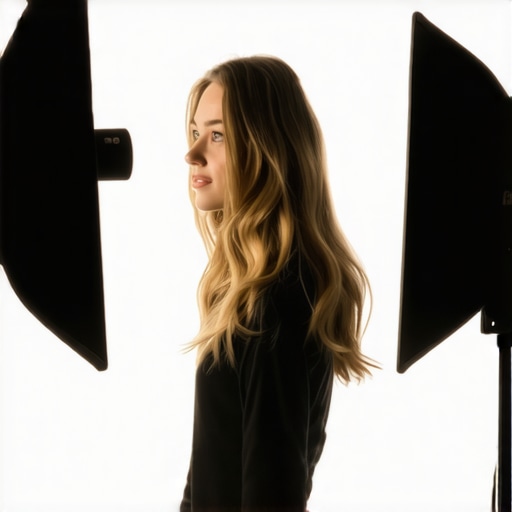
The first step is placing your softbox at an angle that enhances your subject’s features. Think of it like sculpting—your softbox should mimic the natural fall of sunlight, usually around 45 degrees to the subject’s face. I remember during a shoot, I initially placed my softbox directly in front, which flattened the features. When I moved it to a 45-degree angle and slightly above eye level, the shadows added depth, and the portrait came alive. Experiment with height and distance—closer softboxes create softer light, while moving it back introduces more contrast.
Adjust the Distance for the Perfect Softness
Distance controls the softness of the light. A softbox close to your subject produces gentle, wrapping light, whereas pulling it back results in a more defined shadow. During a recent session, I used a softbox just a foot away for a luminous, gentle glow, but I found that pulling it back to two meters gave sharper shadows, adding dramatic flair. Use this principle to match your desired mood—softer for beauty shots, crisper for edgier portraits.
Fine-Tune Your Key Light for Mood and Dimension
The key light sets the overall tone. In 2024, adjustable LED key lights give you control over color temperature and intensity. I once set my key light to a cool 5600K for a daytime look, but switching it to warmer 3200K transformed the mood entirely. The goal is to match or creatively contrast your ambient light. Position your key slightly higher than eye level, angling it downward—this prevents unflattering shadows under the chin and emphasizes cheekbones. Think of your key light as the primary storyteller—use it to sculpt your subject’s personality.
Use the Inverse Square Law to Your Advantage
Remember, light intensity diminishes with distance following the inverse square law. During a test shot, I moved my key light closer and saw my subject’s face become more luminous, with shadows softening. Moving it back increased contrast but risked losing detail. Practice this to find the sweet spot where your subject is well-lit without harsh shadows or blown highlights. This technique is especially useful when balancing multiple lights—like your softbox and background lights.
Combine Softbox and Key Light for Natural Results
The magic happens when you coordinate your softbox and key light. For instance, during a shoot, I kept my softbox to the right at 45 degrees, slightly above eye level, and used a warm key light on the left to add contrast. The resulting portrait had beautiful depth and dimension, with natural-looking shadows that mimic sunlight. Use a reflector or fill light to soften any harsh shadows—this could be as simple as a white foam board or a dedicated fill light like an RGB tube softbox. Check your shot from different angles and adjust until the shadows fall softly and naturally.
Implementing These Techniques for Consistent Results
Practice is key. Set up your softbox and key light in your studio, and take test shots while adjusting position, distance, and power. Keep notes on what works best for different skin tones and styles. Over time, you’ll develop an intuitive sense of how to craft the perfect portrait with just the right light placement and intensity. For more advanced lighting setups, explore the latest innovations like LED panel lights or creative key light techniques.
When it comes to mastering studio lighting, many photographers fall into misconceptions that hinder their progress. The most pervasive mistake is assuming that simply owning high-end softboxes and LED key lights guarantees professional results. In reality, the nuances of placement, power adjustment, and understanding the behavior of light are where the real mastery lies. For example, many believe that placing a softbox directly in front of the subject creates the best lighting. However, this often results in flat, unflattering images lacking depth. Instead, angling the softbox at around 45 degrees and slightly above eye level introduces natural shadows that sculpt the face beautifully.
Another common misconception is that bigger softboxes always produce better results. While larger softboxes do create softer light, they also require more precise positioning and can cause unwanted spill if not carefully managed. Overly close softboxes can flatten features, so understanding how distance affects softness and shadow quality is crucial. For instance, pulling the softbox back to two meters might introduce more contrast and dimension, which can be more flattering for certain styles. This is why experimenting with distance and angle is vital—it’s not just about gear size but about how you manipulate it to craft the desired mood.
Many photographers also overlook the importance of balancing key light intensity with ambient or fill lights. Relying solely on a powerful key light can create harsh shadows and unnatural skin tones. Instead, subtle adjustments—like using a fill light or reflector—soften shadows and add dimension. For example, during a recent shoot, I used a softbox as my key light and complemented it with a white foam board as a fill, achieving a natural, evenly lit portrait. The mistake to avoid here is over-relying on the main light without considering how shadows and highlights interact, which can lead to flat or overly dramatic images that lack realism.
How can advanced photographers optimize softbox and key light setups for complex scenes?
For seasoned shooters working with complex scenes or multiple subjects, understanding the inverse square law becomes critical. Moving your key light closer or farther significantly impacts shadow softness and contrast, which can either enhance or distort your scene’s mood. Additionally, integrating new tools like adjustable LED softboxes or RGB tube lights allows for dynamic control over color temperature and intensity, enabling more creative expression. According to lighting expert David Hobby, mastering light falloff and shadow placement is essential for creating images that are both dramatic and natural-looking—this is a nuanced skill that takes practice and a deep understanding of physics. For further tips on elevating your lighting game, explore detailed guides like the ultimate softbox and RGB tube lighting strategies. Have you ever fallen into this trap? Let me know in the comments.
Keeping your studio lighting equipment in top shape is crucial for consistent, professional results. Over time, even the most robust gear can suffer from wear and tear, dust accumulation, or technical glitches that compromise image quality. In this section, I’ll share specific tools and routines I personally use to maintain my lighting setup, ensuring longevity and optimal performance.
Why Regular Maintenance Matters
Lighting gear is an investment. Regular upkeep prevents costly repairs and ensures your lights perform at their best, whether you’re shooting portraits, videos, or creative experiments. Neglecting maintenance can lead to flickering LEDs, uneven color temperatures, or even complete failure—disrupting your workflow and delaying projects.
Tools I Recommend for Longevity and Performance
First, investing in a good compressed air can is essential. I use a high-quality, nozzle-controlled can to blow dust out of softbox diffusers, LED panels, and connector ports. Dust and debris can cause flickering or uneven illumination, so quick weekly cleaning keeps everything running smoothly. Second, a microfiber cloth and a gentle contact cleaner are perfect for wiping down external surfaces without scratching or damaging delicate components.
For internal maintenance, I recommend a digital multimeter. This device helps me check the voltage and current of LED panels, ensuring they operate within safe parameters. Regular electrical checks can prevent overheating or component failure. Additionally, I keep a set of spare power adapters and cables, as these are common failure points and easy to replace.
Tracking and Updating Your Equipment
Software updates are often overlooked but vital. Many LED panels and smart lighting systems have firmware updates that fix bugs, improve color accuracy, or add features. I set a quarterly reminder to check the manufacturer’s website or app for updates. This proactive approach keeps my gear functioning efficiently and extends its lifespan.
Furthermore, maintaining a detailed inventory and maintenance log helps me track usage, repairs, and upgrades. This record allows me to plan replacements before equipment fails unexpectedly. It’s a simple but effective way to stay organized and prevent downtime.
Future Trends in Lighting Maintenance and Tools
Looking ahead, I predict that intelligent diagnostic tools integrated into lighting systems will become mainstream. These tools will automatically alert you when a component needs servicing or replacement, reducing guesswork and downtime. Moreover, advancements in modular LED fixtures will make repairs easier—allowing you to swap out individual parts rather than entire panels.
If you want to explore some of the latest tools, I recommend checking out the latest LED panel innovations. These advancements are designed to simplify maintenance and enhance your creative workflow.
Take Action: Try Out an Advanced Maintenance Tip Today
One practical step you can take right now is to perform a quick electrical check with a multimeter on your most-used LED panels. Ensuring stable voltage and current flow can prevent unexpected failures during critical shoots. Regularly performing this check—say, every three months—can save you from costly repairs and keep your lighting setup performing at peak levels.
If you have questions or need personalized advice on maintaining your lighting gear, don’t hesitate to reach out. Staying proactive with maintenance ensures your studio remains a reliable space for your creative work for years to come.
In the realm of studio portraiture, the difference between an average shot and a compelling image often boils down to lighting mastery. After countless experiments and a few lightbulb moments, I discovered that the real secret lies in how you manipulate your softbox and key light angles, distances, and power settings. These techniques have transformed my work, and I believe they can do the same for you.
Lessons from the Front Lines of Lighting
- Angles Matter More Than You Think: Position your softbox at around 45 degrees to your subject’s face and slightly above eye level. This simple shift adds natural shadows that sculpt features beautifully, turning flat lighting into a three-dimensional portrait.
- Distance Is Your Secret Weapon: Closer softboxes create softer, more wrapping light, while pulling them back introduces contrast and depth. Experiment with this to match your mood—soft and romantic or sharp and dramatic.
- Adjust Your Key for Mood: Modern LED key lights with adjustable color temperature and dimming allow you to craft the scene’s atmosphere. Warm tones evoke intimacy, while cooler settings suggest freshness or professionalism.
- Balance Is Key: Incorporate fill lights or reflectors to soften shadows and add dimension. The goal isn’t just bright, but well-balanced illumination that highlights personality and style.
- Physics in Action: Use the inverse square law to control shadow softness and contrast dynamically. Moving your light just a few inches can dramatically change the scene’s feel—practice to find your perfect balance.
My Go-To Tools for Consistent Results
- LED Softbox Panels: These offer adjustable color temperatures and dimming, giving you versatile control. Check out the latest softbox LED panels for innovative options that simplify setup.
- Multimeter: Regular electrical checks on your LED panels prevent overheating and ensure stable performance. I personally rely on mine to maintain peak condition.
- Cleaning Supplies: Compressed air and microfiber cloths keep dust at bay, preserving the quality of your diffusers and LEDs.
- Firmware Updates: Stay current with your gear’s firmware to unlock new features and maintain reliability. Regular updates extend your equipment’s lifespan and improve results.
Let’s Bring It All Together
By mastering the nuances of softbox and key light positioning, you’ll unlock a new level of control and creativity. The payoff isn’t just technical; it’s emotional—your portraits will resonate more deeply because of how beautifully you light your subjects. Keep practicing these techniques, experiment freely, and don’t shy away from pushing your gear’s limits.
Have you ever struggled with softbox placement or adjusting your key light for different moods? Drop your experiences or questions below—let’s elevate our lighting game together!
![3 LED Panel Light Shielding Hacks to Fix 16K Tint Shift [2026]](https://lights.creatorrigreviews.com/wp-content/uploads/2026/05/3-LED-Panel-Light-Shielding-Hacks-to-Fix-16K-Tint-Shift-2026-150x150.jpeg)

5 responses to “Softbox & Key Light Techniques for Stunning Studio Portraits in 2024”
I completely relate to the challenges of softbox placement. Early in my photography journey, I used to put my softbox directly in front of my subject, which gave flat lighting that I wasn’t happy with at all. It wasn’t until I started experimenting with angles—around 45 degrees and slightly above eye level—that I saw a huge improvement in the depth and natural look of my portraits. It’s fascinating how such a simple adjustment can add so much dimension. I also found that adjusting the distance to control softness really made a difference, especially when switching between beauty and dramatic styles.
For those just starting out, do you find it more intuitive to start with angle adjustments or experimenting with distance first? Personally, I prefer tweaking the angle first because it greatly influences shadow placement and mood. What about everyone else—any tips on balancing these two for consistent results? Great insights in this post, I’m excited to try these techniques in my next shoot!
This article really resonates with my experience—small adjustments in softbox placement and distance have transformed my portrait work more than I expected. I’ve found that working with the angle first gives me a good starting point for shadow shaping, then fine-tuning the distance helps control the softness or contrast I desire. I also appreciate the reminder that technology alone won’t elevate your images; mastering the principles of light is key. I recently experimented with RGB softboxes and noticed how shifting the color temperature can completely change the mood of a portrait.
Does anyone have tips for balancing multiple light sources when working with tight space? I often struggle with avoiding unwanted spill and shadows, especially when adding background lights or reflectors. Sharing techniques on that would be really helpful. Also, how do you approach trying new equipment or modifiers—do you experiment during shoots or set dedicated testing days? Thanks for a thorough post—these insights will definitely help me refine my lighting setups for more dynamic portraits.
I really enjoyed reading this detailed breakdown. It’s so true that mastering light placement, especially softbox angles and distance, can make a huge difference. I’ve found that even small tweaks in softbox positioning can introduce or soften shadows to bring out more character in portraits, which aligns with my own experience. I’ve been experimenting with moving my softbox slightly higher and at a sharper angle to create more dynamic cheekbone shadows. One thing I’d love to hear more about is balancing the use of different modifiers, like grids or diffusers, to control spill without losing softness. How do others manage that in tight spaces?
Also, I’m curious if any of you use spectrally tunable LED lights to match ambient lighting conditions? I’ve started integrating color temperature adjustments, and it’s fascinating to see how subtle shifts can change the entire mood of an image. Do you think this level of control is essential for studio portraits, or is traditional softbox tweaking enough? Looking forward to trying these tips in my next shoot—thanks for sharing such comprehensive insights!
This post really hits the mark about the importance of softbox and key light positioning. I’ve noticed that adjusting the angle of the softbox, especially around the 45-degree mark, really brings depth back into my portraits after I used to keep it too frontal. Moving the softbox just a few inches in or out, or changing its height, can totally shift the mood—sometimes soft and romantic, other times more dramatic. It’s fascinating how such minor tweaks can make a big difference. I’ve also been exploring the inverse square law, and it’s a game changer for controlling contrast and shadow softness.
What approaches do others find most effective when balancing multiple lights in a confined space? I often struggle with spill and unwanted shadows, especially when trying to keep the background or accent lights clean. Do you prefer experimenting during actual shoots or dedicated test sessions? I’d love to hear different strategies for refining these setups so I can get more consistent results. Thanks for sharing such detailed insights; it’s given me plenty to experiment with in my next studio session!
This post resonates so much with me, especially the part about softbox placement and angles. I used to keep my softbox directly in front, thinking it was the ‘safer’ choice, but I quickly realized it lacked depth and dimension. Moving the softbox to about 45 degrees and slightly above eye level really changed my portraits—suddenly they looked more natural and engaging. I also found that the distance is critical; close softboxes give you that beautiful wrap, but pulling back adds contrast and drama—great for variety. What are your preferred distance ranges for different styles?
I’m curious how everyone balances multiple lights in small spaces. I’ve struggled with spill and unwanted shadows, especially when working with background lights or reflectors. Do you have go-to strategies for keeping everything tidy?
Thanks for sharing these detailed tips. I’m excited to experiment more with positioning to elevate my portrait work. Also, do you think incorporating tools like spectral LED options makes a noticeable difference, or is traditional tweaking enough? Would love to hear everyone’s experience on that.