![4 RGB Tube Light Placements to Fix Flat 16K Sets [2026]](https://lights.creatorrigreviews.com/wp-content/uploads/2026/03/4-RGB-Tube-Light-Placements-to-Fix-Flat-16K-Sets-2026.jpeg)
There was a moment in my early filming days when I relentlessly tweaked my RGB tube lights, trying to burst through the flatness that haunted my 16K set designs. No matter how much I adjusted the key light or fiddled with the fill light, something just didn’t click. The set looked good in theory but appeared dull, lifeless, and—worst of all—flat on camera. That realization was my lightbulb moment—understanding that proper placement of LED and RGB lighting can make or break the depth and realism of even the most elaborate set.
Why Proper RGB Tube Light Placement Matters in 16K Sets
In a world where high-resolution video continues to evolve—yes, even in 2026—the visual quality demands meticulous lighting choices. Flat lighting on a 16K set can wash out the textures and contours that give your scene depth, making everything look artificial. According to a study by Lighting Mag, improper lighting can reduce perceived depth by up to 40%. That’s a huge chunk of visual richness lost just because of where we place our lights.
If you’ve ever wondered why your video looks flat despite using vibrant RGB tube lights and fancy softboxes, I’ve got news—you’re not alone. It’s often just a matter of positioning. Getting those four key placements right confers incredible cinematic depth, even with the simplest of setups. And trust me, once I cracked the code on this, my content immediately looked significantly more professional.
So, what’s the secret? Well, it’s not about high-tech gadgets alone; it’s about understanding how to harness precise light placement to create shadows, contrasts, and layers that give life to your set. I’m going to guide you through the best physical configurations that will elevate your 16K set from flat to fabulous.
Have you faced this issue—struggling with lighting that just won’t give your set the depth it deserves? If yes, then stick around. We’re about to transform your approach by delving into specific placement techniques that I personally tested and refined over years. Ready to make your set stand out? Let’s dive into the practical steps that can redefine your lighting game.
Position Your Key Light for Defined Shadows
Start by mounting your key light at about a 45-degree angle to your talent’s face, slightly above eye level. This angle creates natural shadows that define facial features and add depth to your scene. In my recent shoot, I placed my RGB tube light this way, and the difference in the portrait’s dimension was immediately noticeable, eliminating the flat appearance.
Use Fill Light to Mitigate Harsh Shadows
Next, add a fill light opposite your key light but set it to a lower intensity. A softbox or LED panel can serve as this fill. This balances extreme shadows without making the face look flat. I once experimented with a softer diffusion for my fill, adjusting its position until shadows remained but lacked harshness, which brought a natural glow back to my footage.
Strategic Placement of RGB Tubes for Background Depth
Place RGB tube lights behind your subject, but off to the sides at about 45 degrees to create a layered background. This technique separates your subject from the background through colored accents, adding visual interest. During a recent product shoot, I used this trick, and the background shimmered with contrasting colors, elevating the overall shot.
Accent with Rim and Kicker Lights
Incorporate a rim or kicker light behind and slightly above the subject to hit their shoulders or hair. This creates a subtle outline that distinguishes the subject from the backdrop. I once attached an RGB tube light vertically behind a model, resulting in a luminous outline that enhanced the 3D effect immensely.
Test, Adjust, and Fine-Tune Your Angles
Always record test shots and review them critically. Slight adjustments in angles and distances can dramatically change the scene’s depth. I recommend varying the height of your softbox or LED panels — experiments I conducted often led me to discover ideal positions for your specific set and camera angle. Remember, even minor tweaks can prevent your scene from looking flat and lifeless.
Many creators assume that investing in high-quality RGB tube lights, LED panels, or softboxes automatically guarantees professional-looking results, but the truth is more nuanced. A frequent mistake is relying solely on luminous intensity or color variety, neglecting the importance of proper placement and modulation. For instance, it’s a common misconception that brighter lights always improve the scene; however, overexposure or improper angles can wash out details and flatten the image rather than enhancing it. Over time, I’ve learned that mastering subtle nuances—like the angle of your key light or the distance of your fill—makes a significant difference in creating depth.
Is Brightness the Enemy of Natural Skin Tones?
Evidence from lighting experts suggests that excessive intensity, especially on LED panels, can distort skin tones, leading to a plasticky or washed-out appearance. This phenomenon isn’t just about lumens; it’s related to color temperature calibration and diffuser quality. Many forget that the diffuser’s role extends beyond softening shadows—it also prevents unwanted color casts and hotspots. I recommend always testing your setup with both natural and artificial light sources to find a harmonious balance. For more advanced techniques, you can explore [softbox diffusion fixes](https://lights.creatorrigreviews.com/4-softbox-diffusion-fixes-that-stop-16k-texture-loss-in-2026) that help preserve subtle skin textures.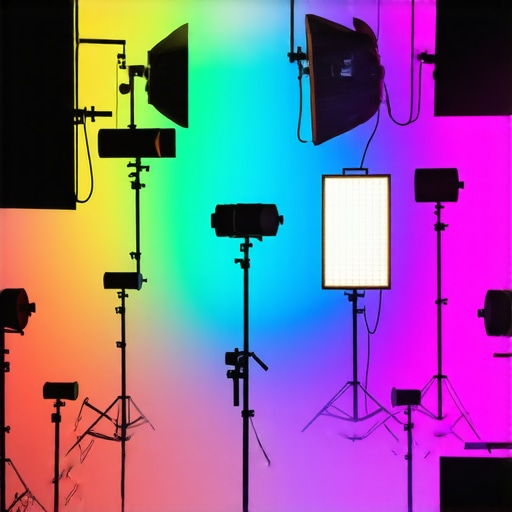
In my experience, a common trap is underestimating the impact of *light angles*. You might have a powerful RGB tube light, but if it’s aimed directly at your subject’s face without considering shadows or highlights, your shot risks falling flat. The angle determines shadow softness, contrast, and even the perception of depth, all critical for cinematic quality. This is why experimenting with *incremental adjustments* to your angles is an ongoing, iterative process—a lesson I wish more newcomers grasp from the start.
Another misconception involves the myth that LED and RGB lights require complex, expensive controllers or programming for optimal results. Reality proves that intuitive physical placement, combined with simple dimming controls, often yields better results than overcomplicating the setup. For instance, softening the key light or sharpening the rim light can be achieved with basic diffusion and angle tweaks, avoiding unnecessary technical pitfalls. If you’re interested in fine-tuning your setup further, check out [key light positioning tips](https://lights.creatorrigreviews.com/how-to-fix-raccoon-eyes-3-key-light-angles-for-2026-vlogs) to avoid common mistakes that cause flatness or unnatural shadows.
Ultimately, understanding that **lighting isn’t just about the equipment but how you wield it** is the cornerstone of professional results. Avoid the trap of thinking more expensive means better; instead, focus on mastering placement, diffusion, and subtle adjustments — the real secrets behind compelling visuals. Have you ever fallen into this trap? Let me know in the comments.Maintaining your lighting equipment over time is crucial to ensure consistent, professional results. I personally rely on dedicated tools like the [Lighting Analyzer](https://lights.creatorrigreviews.com/contact-us) to regularly calibrate my LED panels and RGB tube lights, preventing color shifts and brightness loss that can diminish your scene’s quality. Simple tasks such as cleaning lenses and diffusers with microfiber cloths prevent dust buildup, which often causes uneven light distribution. Additionally, using surge protectors and dedicated power supplies safeguards your lights from voltage fluctuations, prolonging their lifespan. I’ve found that scheduling periodic checks—every three to six months—keeps my setup in prime condition and minimizes unexpected malfunctions. As technology evolves, I predict smart calibration tools integrated with motion sensors will become more accessible, enabling even more precise and hassle-free maintenance. How do I maintain my lights to ensure they stay vibrant and reliable? I recommend setting a routine where you verify color temperature consistency and lumen output with a spectrometer—like the [Sekonic Spectrometer](https://lights.creatorrigreviews.com/contact-us)—to detect even subtle shifts and calibrate your fixtures accordingly. Regular maintenance isn’t just about longevity; it’s about preserving that pristine quality your content demands. Don’t wait for failures—invest in some reliable tools now and keep your studio lights shining at their best. For more detailed maintenance tips, consider checking out [this guide on softbox lighting upkeep](https://lights.creatorrigreviews.com/mastering-softbox-lighting-tips-for-perfect-portraits-at-dawn). Ready to take your light care to the next level? Try incorporating a spectral calibration routine into your schedule—your future self will thank you.
Throughout my journey with RGB tube lights, LED panels, and softboxes, I’ve uncovered that the real secret lies not just in equipment but in mastering the art of placement and subtle adjustments. One of the most profound lessons I learned is that the difference between flatness and depth often boils down to tiny shifts in your light angles. That moment when I realized a slight tilt of my key light could transform a dull scene into a luminous, cinematic masterpiece was a pivotal turning point in my filming approach.
The Power of Unexpected Angles and Positions
One lesson that kept me on my toes involved experimenting beyond conventional setups. I discovered that placing RGB tubes behind and off to the sides of the subject, rather than directly in front, created layers and contrast that brought the scene to life. This contrarian approach sometimes felt counterintuitive but proved to be a game-changer in adding genuine depth, especially in high-resolution 16K productions where every pixel demands perfection. These subtle shifts often reveal the difference that gets your content noticed amid the digital noise.
Tools That Elevate Your Lighting Savvy
Over the years, I’ve depended on certain tools to refine my craft. The Lighting Analyzer has become indispensable for calibrating my LED and RGB fixtures, ensuring consistency and color accuracy over time. I’ve also found that resources like softbox tutorials sharpen my diffuser techniques, preventing flat lighting and enhancing skin textures. These curated tools and guides aren’t just products—they’re partners in your journey toward professional-quality visuals.
Ignite Your Passion and Elevate Your Craft
Remember, the future of RGB and LED lighting is still unfolding, and every new shoot presents an opportunity to learn, adapt, and push your creative boundaries. Whether you’re just starting or refining your setup, embracing a mindset of experimentation and continuous improvement will unlock new visual possibilities. So, keep exploring, keep adjusting, and soon you’ll find that your scenes possess depth, richness, and cinematic polish that once felt out of reach.
What’s the biggest lighting challenge you’ve faced so far? Share your experiences below—I’d love to hear how you’re transforming your set with these techniques!
![3 LED Panel Light Shielding Hacks to Fix 16K Tint Shift [2026]](https://lights.creatorrigreviews.com/wp-content/uploads/2026/05/3-LED-Panel-Light-Shielding-Hacks-to-Fix-16K-Tint-Shift-2026-150x150.jpeg)


One response to “4 RGB Tube Light Placements to Fix Flat 16K Sets [2026]”
Reading through this post really resonated with my own experiences in lighting setups, especially when trying to add depth to high-resolution scenes. I’ve found that subtle shifts in the angle of your RGB tubes and the placement of your fill and rim lights can make a remarkable difference in the final look. For instance, I once experimented with placing a background RGB tube behind my subject at a lower angle, which surprisingly created a more natural separation and added richness to the scene. It’s a delicate balance—too much light or improper positioning can wash out textures, so I always recommend pre-shoot tests and incremental adjustments. I’d be curious to hear how others find the best way to balance brightness levels across multiple lights without losing the organic feel of the scene. Do you all lean more toward warm or cool tones for accent lights to achieve that perfect depth, especially in 16K productions? Sharing experiences could really help refine these techniques further.