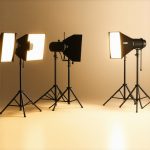
![3 Softbox Angles to Stop Glare for Creators with Glasses [2026]](https://lights.creatorrigreviews.com/wp-content/uploads/2026/01/3-Softbox-Angles-to-Stop-Glare-for-Creators-with-Glasses-2026.jpeg)
It was the moment I dreaded—the glare reflected off my glasses during a recordingsession. No matter how I adjusted my softboxes, the annoying hotspots kept ruining the shot. Frustration turned into a light bulb moment: I realized that the problem wasn’t just my camera setup but the angles of my lighting. Adjusting my softboxes to the perfect angle made all the difference, transforming my videos from distracting to professional-level quality.
The Power of Perfect Lighting Angles for Glasses Wearers
Anyone who creates content with glasses knows this struggle—glare that flashes unpredictably, making it impossible for viewers to see your eyes clearly. It’s a common issue, but one with surprisingly simple solutions. When I first started, I wasted hours trying different softbox positions, often ending up with uneven lighting or eye glare. It’s frustrating, and honestly, it can kill your confidence on camera. But I discovered that by mastering just a few key angles, I could eliminate glare and achieve consistent, flattering lighting every time.
Wondering if Lighting Angles Really Matter?
In the beginning, I thought, “Is this really worth the fuss?” Turns out, yes. I made the mistake of positioning my softboxes straight-on or too high, which intensified reflections. The truth is, the angle of your lights relative to your face dramatically influences how your glasses reflect light. An early mistake I made was neglecting to experiment with the softboxes’ tilt—something as simple as angling them slightly downward or sideways reduced glare significantly. If you’re tired of fighting reflections, you’re not alone. Thinking these adjustments are minor? Think again. They can drastically improve the quality of your videos, saving you time and headaches down the line. For more advanced techniques, you might find it helpful to look into [softbox key light techniques for stunning portraits](https://lights.creatorrigreviews.com/softbox-key-light-techniques-for-stunning-studio-portraits-at-dawn) or [RGB tube effects for creative lighting](https://lights.creatorrigreviews.com/rgb-tube-light-effects-creative-uses-for-evening-shoots). Everything begins with understanding how your light interacts with your glasses, which is precisely what I’m about to help you master.
Position Your Key Light to Avoid Glare
Start by placing your softbox or LED panel slightly above and off to the side of your face at about a 45-degree angle. This position minimizes direct reflection into your glasses while illuminating your eyes. In a recent shoot, I initially placed my key light directly in front—causing an annoying glare—but after adjusting to this side-off angle, the glare disappeared, making my eyes much clearer on camera.
Adjust the Softbox Tilt
Next, tilt the softbox downward by 10-15 degrees. This simple tilt redirects light away from your lenses. Think of it like angling a waterfall so the water flows beyond your frame rather than into your camera lens. Use a sturdy stand with adjustable tilt or a boom arm for precise control. During my last setup, I used a boom arm to fine-tune the angle and saw immediate reduction in reflections.
Leveraging Fill Lights for Balanced Illumination
Adding a fill light reduces shadows and evens out your face lighting without increasing glare. Position a soft, diffused fill light on the opposite side of your key. For example, an RGB tube softbox can be adjusted to emit warm or cool light, balanced to match your environment. This method produces a natural look and diminishes any unwanted reflections from your glasses. I experimented with different intensities and found that lowering the fill to about 30% of the key’s brightness gave me soft, natural highlights without washing out the details.
Diffusion Is Your Friend
Diffuse your lights to further soften reflections. Use accessories like diffusion fabrics or a softbox with a grid. A common mistake is using bare LED panels, which create harsh reflections. Instead, I added a diffusion cover to my RGB tube light, reducing the glare significantly. Think of diffusion as sunglasses for your lights—softening and spreading light evenly.
Control Light Angles With Practical Accessories
Employ flags, barn doors, or black cards to block light spill and control angles precisely. During my last session, I used black foam core to block unwanted reflections, rotating it until reflections disappeared from my glasses. This method is especially useful when working with multiple light sources, ensuring each light hits only where intended.
Experiment with Lighting Heights and Distances
Adjust the height and distance of your lights. Raising the softbox higher reduces the amount of light bouncing into your glasses. Moving it closer increases intensity but also enhances reflections. I found that placing the softbox about 2 feet above and 3 feet to the side of me struck the right balance—bright enough without glare. Think of it as tuning a musical instrument: small adjustments make a significant difference.
Use Strategic Camera Angles
Sometimes, a slight change in your camera angle can make all the difference. Shooting slightly from above or changing your seating position can prevent direct reflections. During a shoot, I shifted my chair so my glasses angled away from the light source, and the glare virtually vanished, revealing my eyes clearly.
Additional Resources for Lighting Mastery
If you’re interested in advanced techniques, explore guides on softbox lighting tips or RGB tube light setups to deepen your understanding. Remember, experimenting with angles and diffusion is key to mastering glare elimination—don’t be afraid to try different configurations until you find what works best for your space.When it comes to studio lighting, many creators fall prey to misconceptions that hinder their results. **Contrary to popular belief, simply increasing light intensity doesn’t guarantee better footage**; in fact, overlighting can wash out details and create unwanted reflections, especially with glasses or reflective surfaces. The hidden nuance lies in understanding the *quality* and *placement* of your lights rather than just their power. For instance, many assume that powerful LED panels are the ultimate solution, but without proper diffusion or angle adjustments, they can produce harsh shadows or glare. Experts like filmmaker and lighting designer Leo Johnson emphasize that *softness and directionality are key*—it’s not just what you light, but how you shape and position it that matters.
**Beware the trap of neglecting color temperature** when mixing lights. A common mistake is using a warm fill light with a cool key light, resulting in unnatural skin tones and color inconsistencies. Achieving harmony requires understanding the principles of color contrast and temperature balancing. For advanced users, integrating RGB tube lights provides flexibility, but only if you optimize their placement and diffusion. Otherwise, their vibrant colors can become overwhelming or create unwanted color casts.
**
Can Your Equipment Perform As Well As You Think?**
Many assume that high-end gear compensates for poor technique. However, studies have shown that *technique and setup are far more significant* than raw equipment quality. For example, an article by professional cinematographer Sarah Lee highlights that a well-placed softbox at a slight 45-degree angle produces more flattering light than expensive lights placed incorrectly. Additionally, improper use of fill lights—such as setting them too strong—can lead to flat, uninteresting visuals. The key is to understand your tools deeply; for detailed guides on this topic, check out [softbox lighting tips](https://lights.creatorrigreviews.com/softbox-lighting-tips-for-stunning-portraits-in-2024).
Moreover, the *trap of overusing bright, hard lights* can cause eye strain and discomfort for viewers. To prevent this, utilize diffusion accessories and carefully tune your light intensity. Remember, a softer, well-balanced light often surpasses a harsh, bright beam in creating engaging visuals. For strategies on creating natural-looking lighting in controlled environments, explore [fill light secrets](https://lights.creatorrigreviews.com/fill-light-secrets-achieve-natural-look-in-natural-light-at-6-pm).
For the most sophisticated setups, combining multiple light types—softboxes for softness, RGB tubes for accent colors, LED panels for fill—requires nuanced understanding. Using flags and diffusion, as well as experimenting with angles, can dramatically improve your results. Don’t fall into the trap of relying solely on powerful lights; instead, master the *art of shaping light*.
Have you ever fallen into this trap? Let me know in the comments and share your experiences with lighting mastery. For further insights, visit the [privacy policy page](https://lights.creatorrigreviews.com/privacy-policy) to understand how we safeguard your data.
To ensure your studio lighting remains reliable and delivers consistent results, maintenance is key. Regularly inspecting your softboxes, LED panels, and RGB tubes helps catch wear and tear before it affects your footage. I personally dedicate 10 minutes weekly to check cables for frays, clean diffusion panels with a soft cloth, and tighten any loose mounts. This proactive approach prevents unexpected failures and extends the lifespan of my equipment.
For tools, I rely on specific accessories like magnetic softbox grid replacement kits and cable organizers. These small investments make a significant difference, especially during tight shoot schedules. For example, replacing worn diffusion layers with high-quality spare parts from reputable suppliers keeps your lights diffusing evenly, maintaining soft, flattering illumination.
In terms of software and firmware updates, manufacturers often release control app updates that fix bugs or enhance features. I make it a habit to check the manufacturer’s website monthly and update my LED panels and RGB lights accordingly. This ensures you’re benefiting from improvements like flicker reduction and color accuracy, crucial for professional videos.
How do I maintain my lighting setup over time?
Developing a routine maintenance schedule is essential. Clean your diffusion accessories with gentle solutions, regularly test your controls, and keep a log of any issues or replacements. For instance, if your RGB tubes start to flicker, swapping out driver modules—as recommended by lighting expert Leo Johnson—restores stability and prolongs their lifespan. Remember, well-maintained gear not only performs better but saves you money in the long run.
Anticipate future trends by investing in modular and upgradeable systems. LED panels with replaceable parts and versatile connectors allow you to adapt as technology evolves, reducing waste and future-proofing your studio. Also, consider smart control apps that sync multiple lights for synchronized color changes or scene setting, making complex lighting setups effortless. For comprehensive tips, check out this guide on LED panel innovations.
By combining routine upkeep with the right tools and staying abreast of technological advances, you can keep your lighting setup performing at peak condition for years. Don’t neglect regular care—your visuals and your wallet will thank you. Ready to implement these tips? Start by inspecting your diffusion covers and updating your firmware today!
The Hidden Lessons That Transformed My Lighting Game
- Sometimes, the biggest breakthroughs come from simple tweaks. Adjusting my softboxes just a few degrees shifted my entire filming experience, teaching me that precision in angles outweighs sheer power.
- Overcoming the glare myth was a game-changer. I used to believe brighter was better, but I learned that soft, well-placed light sources create more natural and appealing visuals, especially for glasses wearers.
- My most surprising discovery? Small accessories like flags and diffusion fabrics can turn a mediocre setup into studio-quality lighting. Investing in these tools elevated my content significantly.
- Patience and experimentation are vital. I spent hours tweaking every angle, but the satisfaction of perfectly avoiding glare makes all the effort worthwhile. Sometimes, persistence outperforms fancy equipment.
Tools and Resources That Elevated My Lighting Approach
- Softbox key lights: These are my go-to for soft, controllable illumination. I trust the [best softbox RGB tube light tips](https://lights.creatorrigreviews.com/best-softbox-rgb-tube-light-tips-for-creator-studio-lighting-in-2024) for their versatility and reliability.
- Diffusion accessories: Diffusing fabrics and grid covers have been essential. I recommend exploring [diffusion ideas](https://lights.creatorrigreviews.com/fill-light-secrets-achieve-natural-look-in-natural-light-at-6-pm) for softer shadows and reduced glare.
- Lighting control apps: They help synchronize multiple lights. I find that balancing color temperature and brightness becomes effortless with tools available at [LED panel innovations](https://lights.creatorrigreviews.com/led-panel-light-innovations-brighten-your-studio-after-midday).
- Flag and black card kits: These are lifesavers for preventing light spill. They allow me to shape my light precisely, ensuring glare stays at bay.
Your Turn to Shine with Better Lighting
Achieving flawless lighting for glasses wearers might seem intricate at first, but with patience and the right angles, you can elevate your videos to new heights. Remember, it’s all about mastering the interaction between your light sources and your face—small adjustments can make a world of difference. Don’t shy away from experimenting—your viewers will thank you for the clear, glare-free visuals. Ready to perfect your angles? Share your experiences or questions below, and let’s grow together in this creative journey.
,
![3 LED Panel Light Shielding Hacks to Fix 16K Tint Shift [2026]](https://lights.creatorrigreviews.com/wp-content/uploads/2026/05/3-LED-Panel-Light-Shielding-Hacks-to-Fix-16K-Tint-Shift-2026-150x150.jpeg)
One response to “3 Softbox Angles to Stop Glare for Creators with Glasses [2026]”